
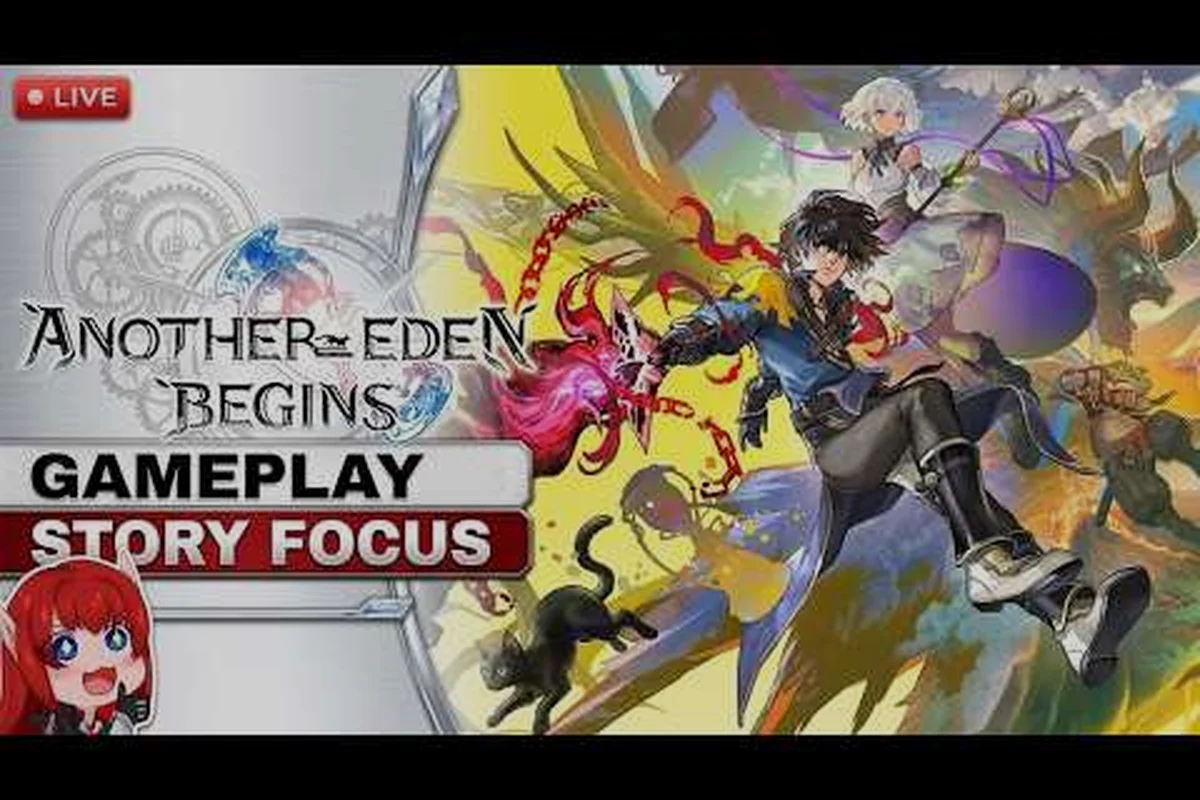
Understanding the timeline of Another Eden Begins eras explained across Antiquity, Present, and Future unlocks the deeper meaning behind every quest, summon, and folklore. The game stitches a 22,000-year saga using crystallized prisma energy, four elemental spirits, and recurring characters who age in reverse, which is why newcomers often feel lost the first time Aldo opens the door to a city that has not been built yet. This lore guide walks through the canonical chronology, names the beings that shaped each age, and clarifies how prisma crystals power the world so the main story finally clicks.
According to the official Another Eden site, each era is unlocked progressively as you advance through the main storyline, with Part 1 and Part 2 of the story opening up a series of chronologically distinct periods to explore.
The Three Canonical Eras and Their Years
The official site confirms Another Eden Begins uses three named eras to frame the journey: the Antiquity of 20,000 BC, the Present of 300 AD, and the Future of 1,100 AD, with the Shining City of Elzion as the far-future hub. Each era is a self-contained chapter with its own villains, party members, and emotional beats, but the eras share a single cosmology built on prisma energy and the four elemental spirits who guarded the ancient world.
| Era | In-Game Year | Defining Region | Core Conflict | Source |
|---|---|---|---|---|
| Antiquity | 20,000 BC | The Beastlands, Palsifal Forest | Stopping the demon king from breaking the ancient covenant | Official site |
| Present | 300 AD | Garulea Continent, Baruoki | Recovering the stolen Time Records from Ogre Wars survivors | Official site |
| Future | 1,100 AD | Shining City of Elzion | Defeating the Synthetic Beasts and the project that created them | Official site, Wikipedia |
Antiquity — 20,000 BC and the Age of Elementals
The Antiquity opens in a primordial world protected by four great elementals who sealed a cataclysmic threat underground. According to the official lore pages, the four spirits — Garuda of wind, Kirin of thunder, Jörmungandr of water, and Ifrit of fire — each guarded a cardinal pillar of civilization, and the imbalance created by a forgotten betrayal is what eventually awakens the demon king. Players who recruit the elemental-touched characters feel this age most directly because the four-element cosmology is woven into every class ability and most weapon upgrades.
The Antiquity also introduces Prisma Crystals as the raw material that the elementals refined into armor, blades, and tuning forks. Community data shows that every Antiquity-era weapon is upgraded using these crystals, and the higher-tier the weapon, the more refined the prisma shard required. The crystals double as both currency and narrative device: when the demon king shatters the central pillar, he also shatters the prisma lattice, and the resulting dust becomes the corrupted energy that bleeds into the Present 22,000 years later.
Present — 300 AD and the Human Kingdoms
The Present era, set in 300 AD, is where the bulk of the playable cast lives. According to the official character roster, recruits like Shion the Fugen Itto-Ryu samurai and Mariel the cat-loving priest are native to this age, and their personal arcs are written against the backdrop of human kingdoms learning to live without elemental protection. The collapse of the prisma network is the inciting incident here: with the crystals fragmented, humans discovered how to refine them into industrial fuel, which gave rise to both new magic schools and the weapons that later became the Ogre Wars arsenal.
Players following the Present storyline will notice that every dungeon rewards Prisma Fragments that can be exchanged at Baruoki's workshop for stat boosts. The fragments are mechanically distinct from the Antiquity-era crystals because they are unstable, and the workshop's stasis field is the only thing keeping them from dissipating. This is the cleanest in-game illustration of the prisma energy economy, and it is why veteran players recommend clearing the Present-era dungeons before pushing into Future content.
Future — 1,100 AD and the Shining City of Elzion
The Future era moves the calendar to 1,100 AD, where humanity has rebuilt civilization inside a sealed arcology called the Shining City of Elzion. According to the official site, Elzion is powered by a clean prisma reactor, and its citizens have genetically engineered companions called Synthetic Beasts to guard the perimeter. The conflict in this era is the one that ties the whole saga together, because the Synthetic Beasts are revealed to be a misguided attempt to recreate the four elemental spirits using human science and crystallized prisma cores.
This is also the era where the Elemental Spirits return in their modernized forms, and the game uses the reunion to show how each spirit has been reinterpreted by a culture that no longer remembers the Antiquity covenant. The Future arc is widely considered the emotional climax of the original Another Eden: The Cat Beyond Time and Space storyline, and players who finish it unlock the New Game+ tier that exposes the demon king's true name. New players should not skip the Future content even on a first run, because the class upgrades granted by the Future dungeon rewards scale into the post-game.
How Prisma Energy Powers the World
Prisma energy explained in mechanical terms is a refined form of ambient mana that the four elemental spirits crystallized during the Antiquity. When the central pillar fell, the crystals shattered and scattered across the planet, and each shard retained a fragment of the spirit who forged it. In the Present, scholars learned to stabilize these shards, and the resulting technology — stasis workshops, prisma reactors, elemental tuning forks — is what makes the human kingdoms viable without the spirits' direct protection.
| Prisma Resource | Era of Origin | Mechanical Use | Lore Significance |
|---|---|---|---|
| Prisma Crystals | Antiquity (20,000 BC) | Weapon and armor upgrades | The original lattice shattered by the demon king |
| Prisma Fragments | Present (300 AD) | Workshop stat boosts and crafting | Stabilized shards that fuel human industry |
| Prisma Cores | Future (1,100 AD) | Reactor fuel and dungeon keys | The refined output of the Elzion reactor |
| Tuning Forks | All three eras | Elemental-summon catalysts | The spiritual resonance each spirit left behind |
Prisma Crystals, Fragments, and Cores
The prisma crystals are the purest form of the resource, and they are the only material that the Antiquity-era blacksmith will accept for end-game weapon refines. Players who skip the Antiquity content will find their Present-era gear capped well below the dungeon level curve, and this is by design — the Antiquity weapons are the only ones whose upgrade tree is still intact after the demon king's attack. Community data suggests farming the Palsifal Forest crystals in batches of 50 is the most efficient pre-Future strategy, because the Future dungeon drops are tuned to expect players who already own a fully refined Antiquity blade.
How Elemental Spirits Channel Prisma
Each of the four elemental spirits channels prisma through a different sense: Garuda through wind pressure, Kirin through electrical discharge, Jörmungandr through tidal resonance, and Ifrit through thermal radiation. This matters in combat because a party built around one element gains a stacking buff whenever a teammate lands a matching-element attack, and the buff scales with the refinement level of the equipped prisma crystal. A Wind-element team, for example, can chain four Garuda procs in a single round if every weapon is refined with Wind-Tuned Prisma Crystals, and the resulting damage multiplier is the highest single-target burst available before the Future-tier weapons unlock.
Characters Who Bridge the Three Eras
The most distinctive narrative trick in Another Eden Begins is the recurring cast, and the recurring characters are the ones that make the eras feel like a single story rather than three unrelated campaigns. Aldo, the silent protagonist, appears in every era because he is the only human whose soul is bound to the prisma lattice, and the lattice is what allows time travel without aging. The supporting cast is more varied: Feinne is rescued in the Present but the Fugen Itto-Ryu flashback reveals her Antiquity training, and Cyrus is a Future-era scientist who quietly appears in Present-era ruins as a researcher trying to recreate prisma refinement.
| Recurring Character | First-Era Appearance | Later-Era Role | Key Mechanic |
|---|---|---|---|
| Aldo | Antiquity (20,000 BC) | Appears in all three eras | Soul-bound to the prisma lattice, immune to time aging |
| Feinne | Present (300 AD) | Antiquity flashback | Memory-based damage scaling when paired with a wind ally |
| Cyrus | Future (1,100 AD) | Present ruins cameo | Grants a prisma-refining discount at the workshop |
| Mariel | Present (300 AD) | Future support unit | Healing scales with recovered prisma fragments |
| Shion | Present (300 AD) | Antiquity spirit-bonded | Can channel a tuned weapon into a one-shot summon |
Why Aldo Is the Only Constant
Aldo's immunity to time aging is not just a narrative convenience — it is the mechanical reason the party composition does not break between eras. Because his soul is anchored to the prisma lattice, the level he reaches in the Antiquity carries over directly into the Present and the Future, and his equipment slots are the only ones that accept era-specific prisma crystals without a conversion penalty. New players who under-level Aldo in the Antiquity often find themselves stuck in the Present-era mid-boss content, which is why the beginner guide recommends front-loading his Antiquity leveling before chasing side quests.
Party Building Across Eras
The cleanest party for a first-time run pairs Aldo with one Antiquity-tuned damage dealer, one Present-era healer, and one Future-era support. This composition covers every elemental matchup because the damage dealer triggers the prisma chain, the healer converts recovered fragments into burst heals, and the support extends the chain with off-element procs. A budget version of this build swaps the Antiquity dealer for Shion, who can channel a Present-era weapon into a one-shot summon, and the trade-off is a slightly lower damage ceiling in exchange for much smoother early progression.
The Elemental Spirits and Their Cultural Echoes
The four elemental spirits are the connective tissue of the entire folklore guide, and each spirit reappears in every era wearing a different cultural mask. Garuda shows up in the Antiquity as a primordial bird, in the Present as the crest of the Wind Nation, and in the Future as the AI core of Elzion's atmospheric processor. The pattern repeats for Kirin, Jörmungandr, and Ifrit, and recognizing the pattern is what lets players predict which dungeon will drop a specific spirit's tuning fork before they even enter.
| Spirit | Element | Antiquity Form | Present Form | Future Form | Tuning Fork Drop |
|---|---|---|---|---|---|
| Garuda | Wind | Primordial storm-bird | Wind Nation royal crest | Atmospheric AI core | Palsifal Forest, Garuda's Perch |
| Kirin | Thunder | Lightning-clad kirin | Bardiche College mascot | Elzion power-grid core | Present-era thunder ruins |
| Jörmungandr | Water | World-coiling serpent | Coastal kingdom's guardian | Oceanic research probe | Tidal Cave dungeon |
| Ifrit | Fire | Flame djinn | Volcano monastery patron | Synthetic Beast prototype | Magma Furnace dungeon |
Reading the Folklore as a Single Story
The folklore guide interpretation that the community has settled on is that the four elemental spirits are not four beings but four aspects of a single prisma entity that shattered when the central pillar fell. The Antiquity era meets the spirit whole, the Present era meets the four shards as cultural icons, and the Future era meets the reconstructed whole as a Synthetic Beast prototype. This reading explains why the Final Boss scales to the number of spirits the party has fully tuned — every tuning fork recovered is a piece of the original entity, and the boss is testing whether the player has reassembled the prisma lattice.
Why the Elemental Spirits Matter for Combat
Mechanically, each spirit contributes a stacking buff that resets whenever the party wipes, and the buffs are strong enough that running a single-element team is viable from mid-Present onward. Players who clear all four spirit dungeons in the Antiquity before pushing into the Present unlock a fifth buff — the Covenant of the Four — which is the only way to break the shield of the Future-era final boss on the first attempt. Skipping the Antiquity spirit content is technically possible, but the resulting Present-era grind to compensate is the single most common reason new players abandon the run before reaching Elzion.
Frequently Asked Questions
What are the three eras in Another Eden Begins?
The three eras are the Antiquity of 20,000 BC, the Present of 300 AD, and the Future of 1,100 AD, each with its own region, party, and main-story arc. The official site confirms that the Antiquity is protected by four elemental spirits, the Present runs on crystallized prisma energy, and the Future centers on the Shining City of Elzion.
How do prisma crystals work in Another Eden Begins?
Prisma crystals are refined shards of the energy lattice the four elementals built during the Antiquity, and they power weapon upgrades, workshop crafts, and the Elzion reactor. Higher-tier weapons require higher-purity crystals, and the Antiquity-era forge is the only one that accepts unrefined shards without a conversion penalty.
Who are the four elemental spirits in Another Eden Begins?
The four elemental spirits are Garuda of wind, Kirin of thunder, Jörmungandr of water, and Ifrit of fire, and each one reappears in every era as a cultural icon, an industrial tool, or a Synthetic Beast prototype. Recovering all four tuning forks unlocks the Covenant of the Four buff required to break the Future final boss's shield on the first attempt.
Can I skip the Antiquity era on a first playthrough?
You can skip it, but you will lose access to the Covenant of the Four buff, the highest-purity prisma crystals, and the full Antiquity weapon upgrade tree. Community data shows that first-time players who skip the Antiquity content average a 30% longer total run because the Present-era grind to compensate is steeper than the Antiquity content itself.
What is the Shining City of Elzion?
The Shining City of Elzion is the 1,100 AD hub of the Future era, and it is powered by a clean prisma reactor that runs on refined cores harvested from the surrounding dungeons. It is also the only place in the game where the four elemental spirits can be summoned simultaneously, which is why the Future arc is treated as the emotional and mechanical climax of the original saga.